
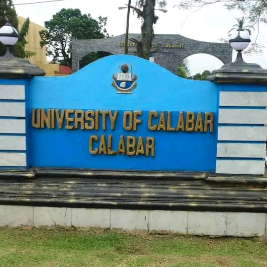
The Management of the University of Calabar (UNICAL), through the Office of the Deputy Vice-Chancellor (Academic), has issued a critical administrative directive regarding the finalization of registration and financial obligations for all 100-level students enrolled in the 2025/2026 academic session. In a formal memorandum released on Monday, February 23, 2026, the institution established a rigid timeline for the closure of essential portals, signaling the transition from the administrative phase of the semester to the rigorous examination period. This directive is a strategic measure intended to sanitize the university’s student database and ensure that only those who have fully regularized their status are permitted to participate in the upcoming first-semester assessments.
The timeline established by the university is exceptionally tight, reflecting the urgency of the academic calendar. The school fee payment portal is scheduled to close officially on Wednesday, February 25, 2026. This financial deadline is the primary hurdle for all fresh students, as the payment of tuition and other statutory levies is the prerequisite for gaining access to the course registration portal. The university has made it clear that the payment portal closure is the final window for students to secure their place in the current session. Following the financial deadline, the course registration portal will remain open for a further forty-eight hours, eventually shutting down on Friday, February 27, 2026. This staggered closure allows students who complete their payments at the last minute a brief interval to finalize their academic documentation.
The university management has emphasized that these deadlines are absolute. To underscore the seriousness of this directive, the Office of the Deputy Vice-Chancellor (Academic) stated that any student who fails to meet these deadlines should consider their admission for the current session void in practical terms. Such students have been explicitly advised to apply for a deferment of admission, which would allow them to resume their studies at the start of the 2026/2027 academic session. This policy prevents the administrative chaos that arises when students attempt to navigate the system as "floaters"—attending lectures and sitting for exams without a valid matriculation record or financial clearance. Deferment ensures that the student’s hard-won admission is preserved for a future date when they are financially and administratively prepared.
The pressure of these deadlines is compounded by the proximity of the first-semester examinations. According to the approved 2025/2026 academic calendar, all 100-level examinations are scheduled to commence on Monday, March 2, 2026. This leaves a gap of only two days between the final closure of the registration portal and the start of the examination diet. The university uses this narrow window to generate final examination attendance sheets and allocate students to various halls across the campus. Students who are not captured in the system by February 27 will find their names missing from the official "Green Sheets" or electronic invigilation rosters, effectively barring them from the examination halls regardless of their attendance at lectures throughout the semester.
The administrative rigor displayed by the University of Calabar in this instance is part of a broader effort to improve institutional efficiency and data integrity. In previous sessions, late registrations often led to delays in the processing of results and complications during the mobilization of graduates for the National Youth Service Corps (NYSC). By enforcing strict deadlines at the 100-level stage, the university is instilling a culture of promptness and compliance in its newest scholars. The Office of the Deputy Vice-Chancellor (Academic) has coordinated closely with the University ICT Centre to ensure that the portals remain stable during the anticipated surge in traffic as the February 25 and February 27 deadlines approach.
Students are urged to take proactive steps to avoid the common pitfalls associated with last-minute registration. These include network failures at commercial banks, intermittent internet connectivity, and errors in course coding. The university advises students to verify their registration status immediately after payment to ensure that their "Course Form" is fully validated and printed. This printed document serves as the student’s primary evidence of registration in the event of any technical discrepancy during the examination period. Furthermore, students should ensure they have completed their medical screenings and other auxiliary departmental clearances, as these are often tied to the final validation of the registration portal.
The memorandum also serves as a reminder of the university’s commitment to academic excellence. By clearing the administrative hurdles early, students are expected to dedicate the final days of February to intensive revision and preparation for the March 2 exams. The 100-level examinations are often a high-stakes introduction to university-level assessment, covering foundational courses that are critical for future specialization. The management’s decision to close the portals well before the start of the exams is intended to eliminate distractions, allowing the campus atmosphere to shift from administrative anxiety to scholarly focus.
As the Malabite and Malabress community prepares for the examination season, the University of Calabar continues to uphold its reputation as a center of "Knowledge and Service." The firm stance on the February 2026 deadlines is a testament to the institution's resolve to operate a predictable and transparent academic system. All 100-level students, their parents, and guardians are encouraged to treat this notice with the required urgency to ensure a smooth transition into the examination phase of their academic journey.